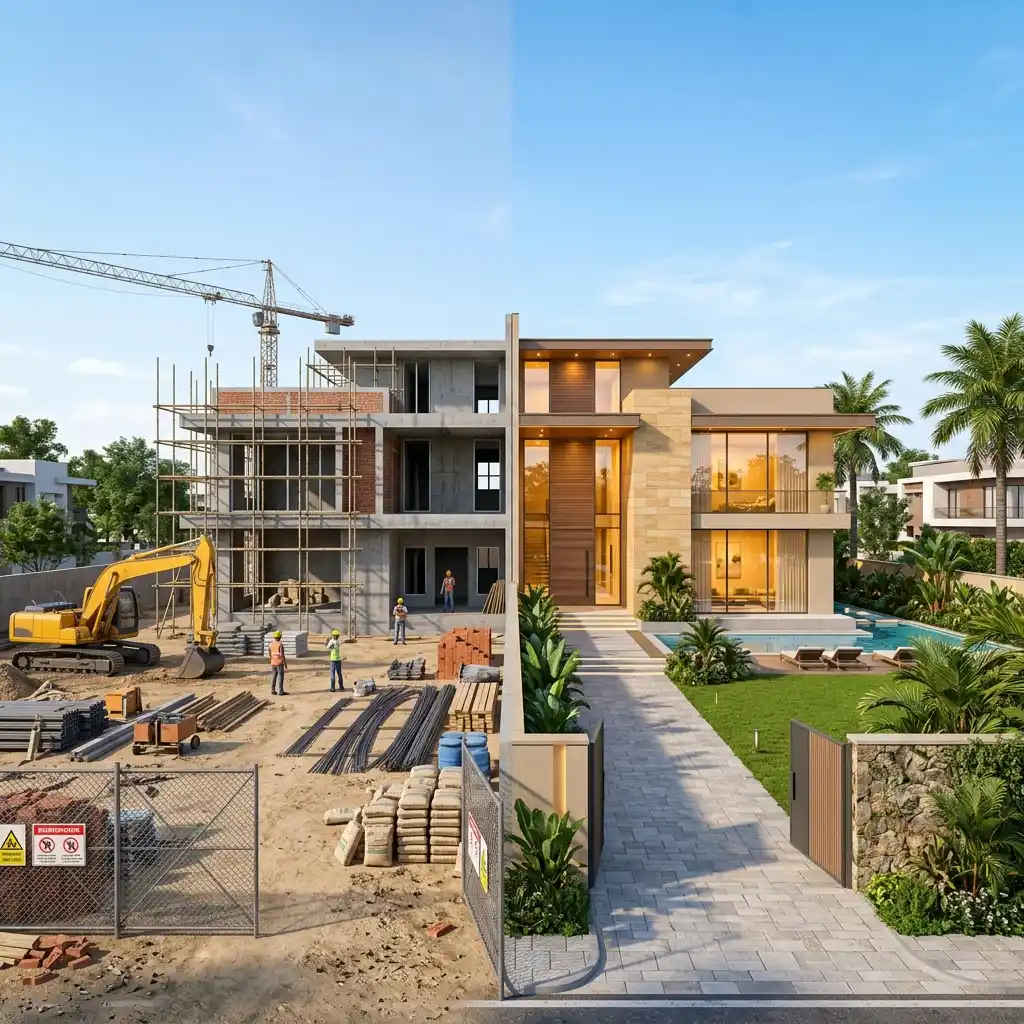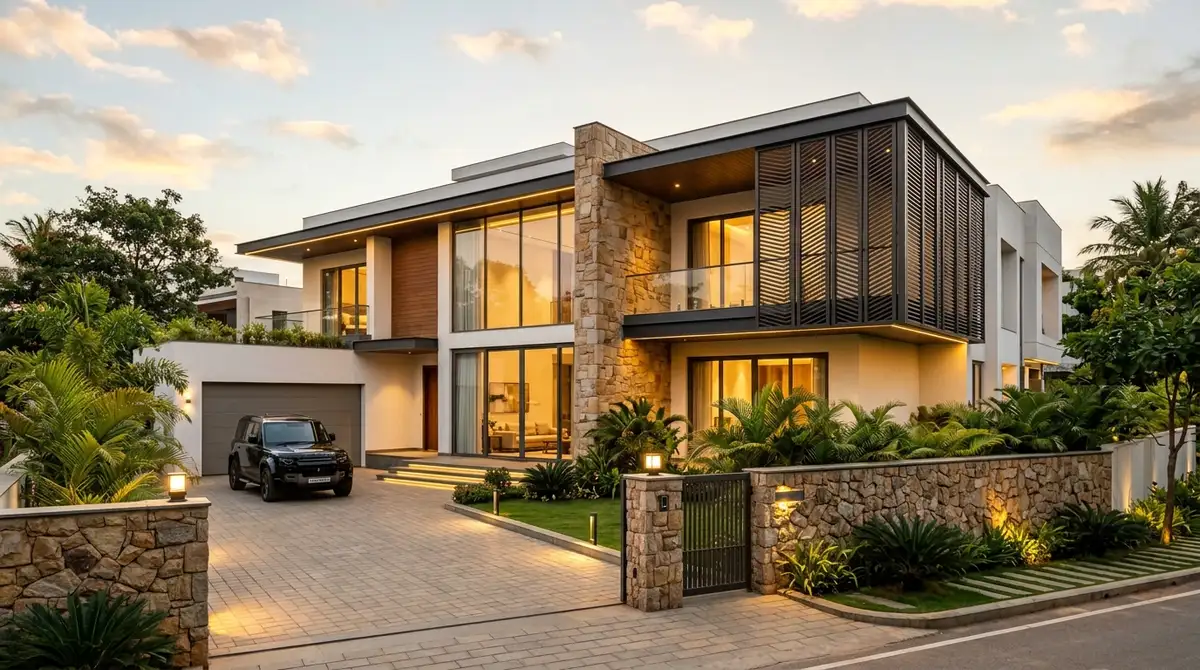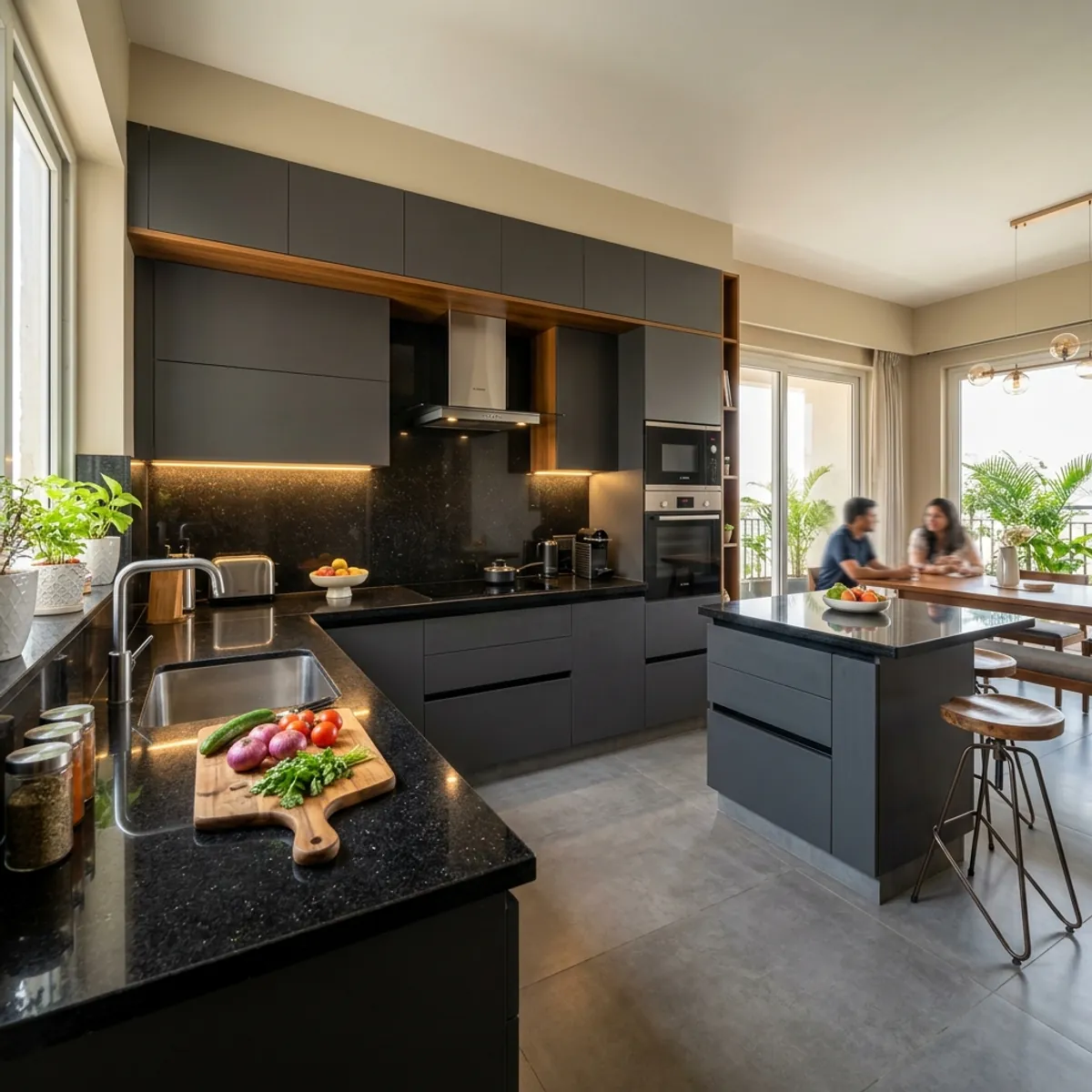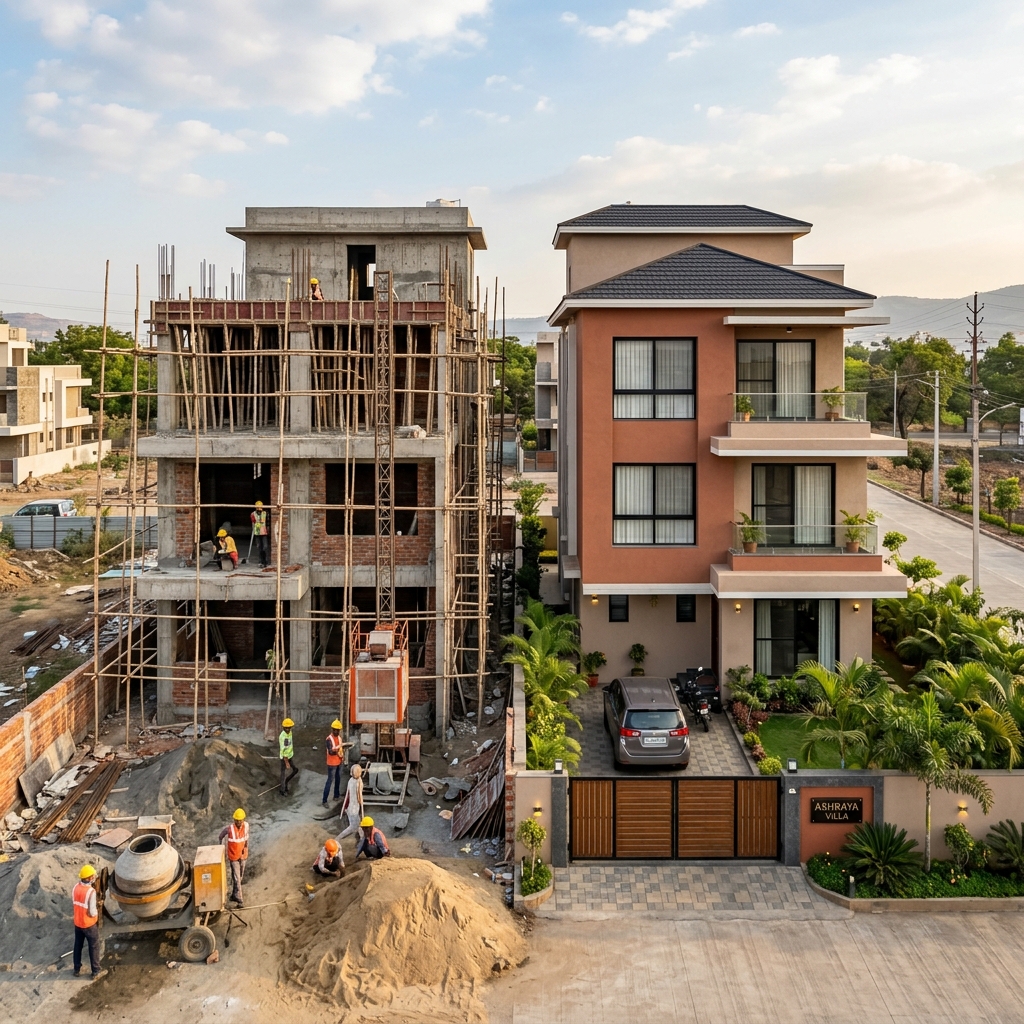
Building a home is an exciting yet complex journey. Understanding the residential construction process in Indore is the foundation for a successful project, so you stay on budget and timeline. For a new homeowner, knowing exactly what happens from the first soil test to the final handover inspection makes the entire experience transparent and stress-free. Every step requires precision, planning and professional execution.
Residential construction in Indore follows eight defined stages: site survey and soil testing, IMC architectural drawing approvals, foundation and plinth work, structural framing, brick masonry, MEP rough-ins, interior finishing and final inspection. Managing all eight stages under a single turnkey contract guarantees a penalty-backed timeline and prevents costly miscommunication.
Whether you are planning a modern bungalow or a spacious family villa, understanding these civil construction stages helps you track progress effectively. From securing your IMC permit to planning Vastu at the foundation stage, every step plays a important role in delivering a home that lasts generations. The cost per stage breakdown gives you complete financial clarity.
What Is the Residential Construction Process in India?
The residential construction process in India moves through eight distinct phases: pre-construction planning, municipal approvals, foundation, structural framing, masonry, MEP rough-ins, interior finishing and final handover. Following this exact sequence prevents expensive rework later and ensures the structure actually meets National Building Code safety requirements.
The residential construction process in India is a systematic sequence of activities that transforms a vacant plot into a fully functional home. It moves from planning and legal approvals to structural engineering, masonry and finally, interior finishing. Following these established home building process India 2026 guidelines guarantees structural safety and prevents expensive rework.
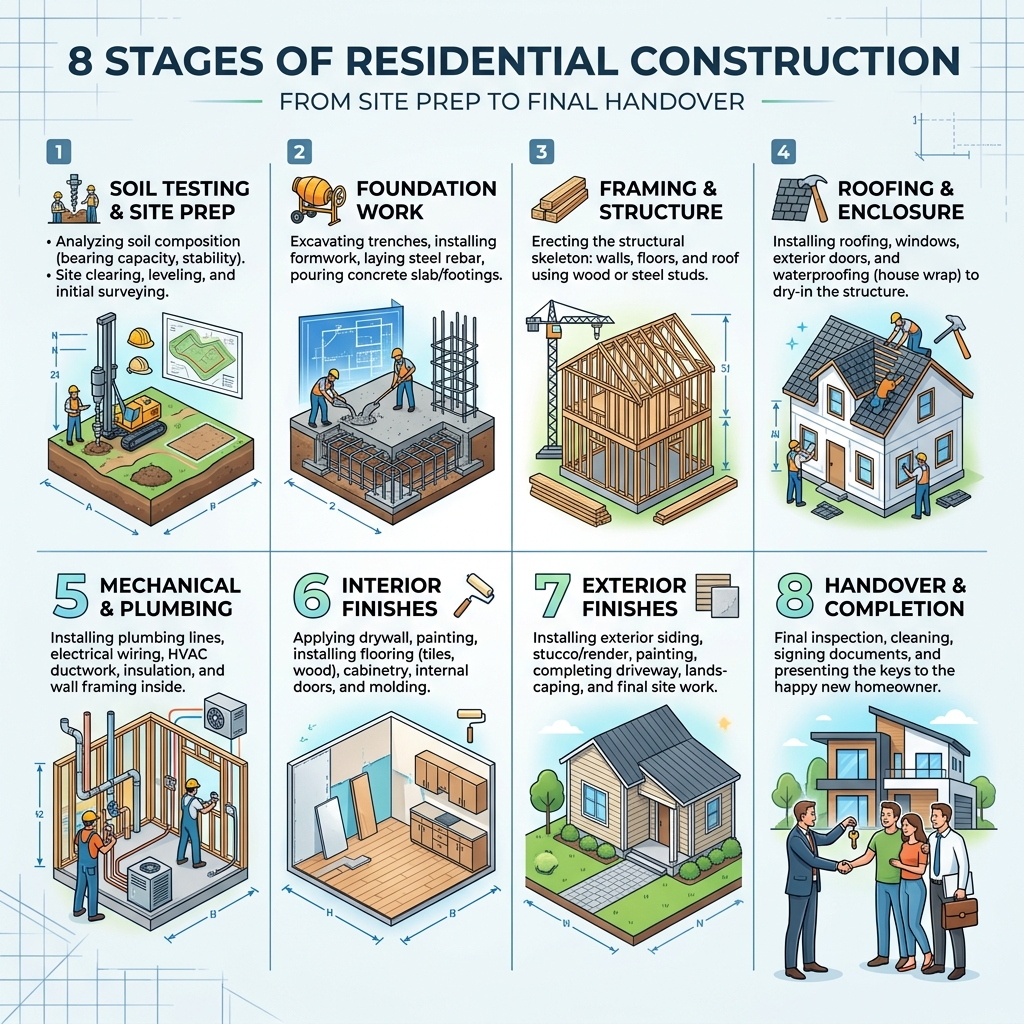
Each phase requires careful coordination between architects, structural engineers and on-site contractors. When all teams operate under one roof, the workflow becomes smooth. Rather than coordinating with multiple separate vendors, homeowners benefit significantly from a single accountable partner. This unified approach eliminates miscommunication and keeps the project strictly aligned with the initial vision.
Furthermore, adhering to National Building Code (NBC) guidelines is non-negotiable for safety. so that your builder follows the correct residential building construction stages MP safeguards your investment against structural failure and future legal complications.
Stage 1 - Site Survey and Soil Testing
The first step in the residential construction process in Indore is soil testing. Indore's local black cotton soil shifts dramatically when wet. If you don't test the soil capacity early, you risk major foundation cracks later. Engineers use these exact reports to design safe raft or pile foundations.
Before any design work begins, a complete site survey and soil testing are mandatory. The soil condition dictates the structural design and the type of foundation required to support your home securely. A professional site survey maps the exact dimensions, existing topography and access points for construction vehicles.
A detailed soil test report reveals the load-bearing capacity of your land. In areas with expansive soils, engineers must design reinforced foundations to prevent future settlement cracks. This foundational step is absolutely major for long-term safety.
Skipping this stage is a massive risk. Some contractors try to save money by avoiding formal soil tests, which can lead to disastrous foundation failures. By understanding the soil profile early, architects can optimise the structural design, so safety without over-engineering and wasting materials.
Stage 2 - Architectural Drawings and IMC Approval (Indore-Specific)
After soil testing, architects finalize blueprints to secure drawing approval from the Indore Municipal Corporation (IMC). You cannot legally start excavation without this permit. It proves your home complies with local zoning rules and setback regulations. We handle this municipal liaison work so you avoid unnecessary bureaucratic delays.
Once the soil test is complete, architects develop the floor plans and 3D elevations. Following this, securing an IMC permit Indore is legally required before breaking ground. The municipal corporation reviews the plans to confirm they meet the city’s specific development guidelines.
For properties registered under new developments, RERA compliance is also a major consideration. Having your structural drawing approval managed by a professional team helps you avoid legal hurdles and bureaucratic delays. Navigating the paperwork can be complex for a homeowner, which is why a turnkey builder handles the entire municipal liaison process.
During this stage, the exact Bill of Quantities (BOQ) is also finalised. This provides a transparent ₹-based cost per stage breakdown, allowing you to secure financing and plan your cash flow accurately.
Stage 3 - Foundation and Plinth Beam Work
Your home's safety relies entirely on the foundation stage. Contractors excavate the plot, pour concrete footings and construct the plinth beam at ground level. The plinth beam actively protects your ground floor from monsoon flooding and dampness, safely transferring the entire building load into the earth.
The foundation is the true anchor of your home. After excavation, the foundation is laid, followed by the construction of the plinth beam which protects the home from dampness and structural shifting. The depth and width of the foundation depend entirely on the earlier soil test results.
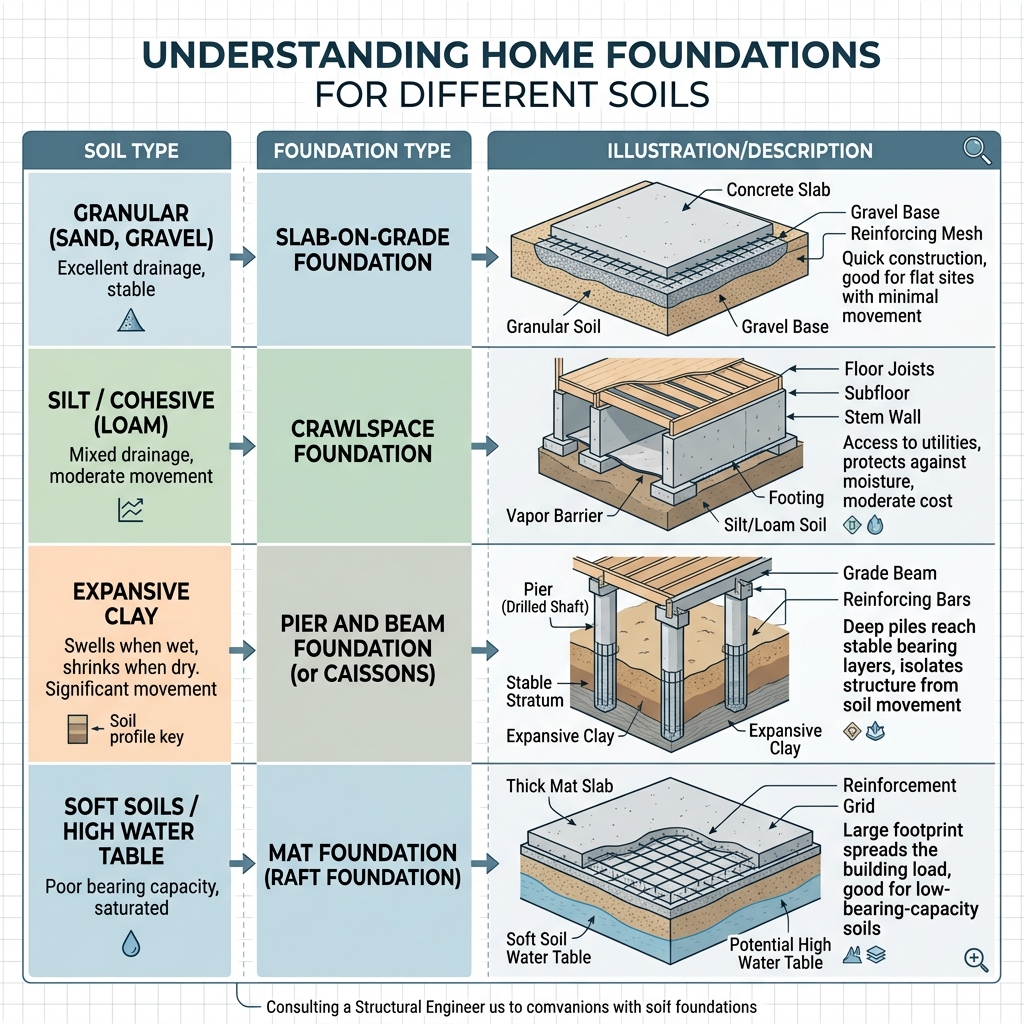
Many homeowners also consult experts for Vastu at foundation stage to confirm the main entrance and structural orientation align with traditional principles. Proper execution here prevents water seepage and helps a rock-solid base. The plinth level also determines the height of your ground floor relative to the street, protecting against monsoon flooding.
Using high-quality cement and anti-termite treatment during this phase extends the lifespan of the building significantly. A poorly executed foundation is almost impossible to fix later.
Stage 4 - Structural Framing (Columns, Beams, Slabs)
Structural framing brings the core skeleton of your home to life. Teams cast reinforced cement concrete columns, beams and roof slabs. This is a massive milestone in the residential construction process in Indore. We mandate a 21-day water curing period here to prevent micro-cracks and maximize earthquake resistance.
This stage brings the skeleton of your home to life. The structural framing involves casting the RCC (Reinforced Cement Concrete) columns, beams and slabs that form the core of the building. It represents a significant portion of the total construction time and budget.
Slab casting is a major milestone in house construction phases Madhya Pradesh. It requires precision engineering and adequate curing time to achieve maximum strength. Using high-grade TMT steel and proper concrete mix ratios here is main for earthquake resistance.
Curing the concrete properly with water for at least 14 to 21 days prevents micro-cracks and helps structural integrity. Rushing this stage to save time is a common mistake that compromises safety.
Looking for a Reliable Construction Partner in Indore?
Let Sarovar Builders handle your project from drawing approval to final handover with our penalty-backed timelines.
Stage 5 - Brick Masonry and Wall Construction
Once the concrete frame sets, contractors build exterior and interior walls using red bricks or AAC blocks. This masonry stage formally separates your open floor plan into defined rooms. Proper mortar mixing and strict alignment here make the upcoming plumbing and electrical installations much easier to execute.
With the structural frame in place, the exterior and interior walls are built using red bricks or AAC (Autoclaved Aerated Concrete) blocks. This stage defines the individual rooms and functional spaces within your home. AAC blocks are becoming increasingly popular for their thermal insulation properties and lighter weight.
Quality brick masonry requires proper mortar mixing and strict vertical alignment. It also sets the stage for the upcoming electrical and plumbing work. Curing the walls properly prevents shrinkage cracks in the future.
The selection of blocks or bricks also impacts the cooling efficiency of the home, which is highly relevant in Indore’s warm climate.
Stage 6 - MEP Rough-In (Electrical, Plumbing, HVAC)
The MEP rough-in stage embeds your home's hidden nervous system. Plumbers and electricians install concealed PVC pipes, wiring conduits and HVAC ducts inside the raw brick walls. Catching layout mistakes now prevents destructive wall-breaking later. Everything gets buried safely under plaster once the utilities are fully tested.
Before the walls are plastered, the mechanical, electrical and plumbing (MEP) systems are installed. This hidden network of pipes and wires powers your daily life. It is important that the architectural drawings are followed precisely to avoid misplaced switchboards or drainage issues.
A well-planned MEP rough-in avoids the need for destructive breaking later. It includes laying concealed wiring, setting up drainage lines and planning switchboard placements. Accuracy here prevents leaks and electrical faults down the line.
Using premium PVC pipes and fire-retardant electrical cables helps safety and durability. Modern homes also integrate smart home wiring and security camera conduits during this phase.
Stage 7 - Interior Finishing (Plastering, Flooring, Paint, Joinery)
Interior finishing transforms the raw concrete shell into a livable space. Teams handle wall plastering, install premium floor tiles, mount false ceilings and complete custom carpentry. This highly visual phase directly determines the final luxury feel of your home, requiring extreme attention to detail and material quality.
The finishing stage transforms the raw structure into a beautiful, liveable space. It covers everything from wall plastering to laying the final tiles and installing woodwork. This is typically the most visually rewarding phase for homeowners.
This phase includes plaster work to smoothen walls, precise flooring work using premium tiles or Italian marble and the installation of a false ceiling. High-quality interior finishing significantly impacts the final look and feel of the home.
The choice of paint, lighting fixtures and sanitaryware defines the luxury tier of the project. A single team managing both structural execution and interior design guarantees that the final finishes match the original 3D renders perfectly.
Stage 8 - Final Inspection, Handover and Documentation
Before moving in, we perform a rigorous final inspection to test every tap, switch and door hinge. We create a strict snagging list to fix any minor defects. Finally, we hand over the keys alongside all structural warranties, officially completing the residential construction process in Indore.
The last step before you move in is a rigorous final inspection. Every switch, tap and door is tested to confirm it meets quality standards. A detailed snagging list is created and any minor defects are rectified immediately.
A thorough handover inspection guarantees that the home is delivered exactly as promised. You will receive all necessary documents, including structural warranties and appliance manuals, marking the successful end of your residential construction process in Indore.
This professional handover provides peace of mind, knowing that the project was completed to the highest government-grade quality standards.
Need Expert Interior Designing?
Transform your bare structural frame into a luxury living space. View our premium interior design services.
How Long Does Residential Construction Take in Indore?
A standard residential build in Indore usually takes 10 to 14 months from the first excavation to the final handover. The exact timeline fluctuates based on your plot size, custom design complexity and monsoon weather delays. Working with a turnkey builder provides a fixed, penalty-backed completion date.
A common question among homeowners is understanding the timeline for completion. In general, a standard residential build in Indore takes between 10 to 14 months. Rushing the process, especially the concrete curing stages, compromises the building’s integrity.
Understanding the timeline helps in managing cash flow throughout these months. A professional contractor provides a penalty-backed timeline, so your project does not drag on unnecessarily. They factor in monsoon challenges and supply chain logistics to deliver on the promised date.
If you are looking for absolute certainty on scope, time and budget, partnering with an experienced design-to-delivery firm is the smartest choice for your new home.
FAQ
What are the stages of house construction?
The stages of house construction include site preparation and soil testing, architectural approvals, foundation work, structural framing, brick masonry, MEP rough-in, interior finishing and the final handover inspection. Each stage must be completed sequentially for structural integrity.
How many phases are there in residential construction?
There are typically 8 main phases in residential construction: planning and permits, foundation, structural framework, masonry, plumbing and electrical rough-ins, exterior and interior finishing and final handover.
How long does it take to build a house in Indore?
Building a standard house in Indore usually takes between 10 to 14 months. The exact timeline depends on the plot size, design complexity, municipal approval speed and weather conditions, especially during the monsoon months.
Why is soil testing necessary before construction?
Soil testing determines the load-bearing capacity of the land, which is major for designing the correct foundation. In Indore, identifying expansive black cotton soil early helps the engineers can design a robust foundation to prevent structural settling.
What is the role of IMC in house construction?
The Indore Municipal Corporation (IMC) reviews and approves architectural and structural drawings to confirm they comply with local building codes, safety regulations and zoning laws before construction can legally begin.
Is it better to hire a turnkey contractor for home construction?
Yes, hiring a turnkey contractor simplifies the residential construction process. It provides a single point of accountability for design, material procurement and execution, reducing coordination delays and unexpected budget overruns.
Need Expert Construction Advice?
Speak directly with our architects and engineers about your specific requirements.
Ready to Start Your Construction Project?
Contact Sarovar Builders for expert construction, interior design and renovation services in Indore.
Get a Free Quote →